
Choosing the Best Fire-Resistant Patio Cover Materials for Southern California

Updated: Jul 17
Understanding Fire Ratings and "Non-Combustible" Status
Before comparing specific materials, we must define what California building codes actually require in high-risk zones. Fire resistance in building materials is generally classified into two main categories:
Class A Fire-Rated: This is the highest rating a material can receive for resisting flame spread. Materials with a Class A rating are highly resistant to fire but are not necessarily completely immune to intense, sustained heat.
Non-Combustible: This means the material itself will not ignite, burn, support combustion, or release flammable vapors when subjected to fire.
In California’s Zone Zero and Wildland-Urban Interface (WUI) areas, municipal building departments overwhelmingly demand non-combustible structural components for any attached patio cover. If an ember storm hits your neighborhood, a traditional wood patio cover acts like giant kindling attached directly to your roofline. The materials below are engineered to break that chain of ignition.
1. Extruded Aluminum Systems (The Premium Standard)
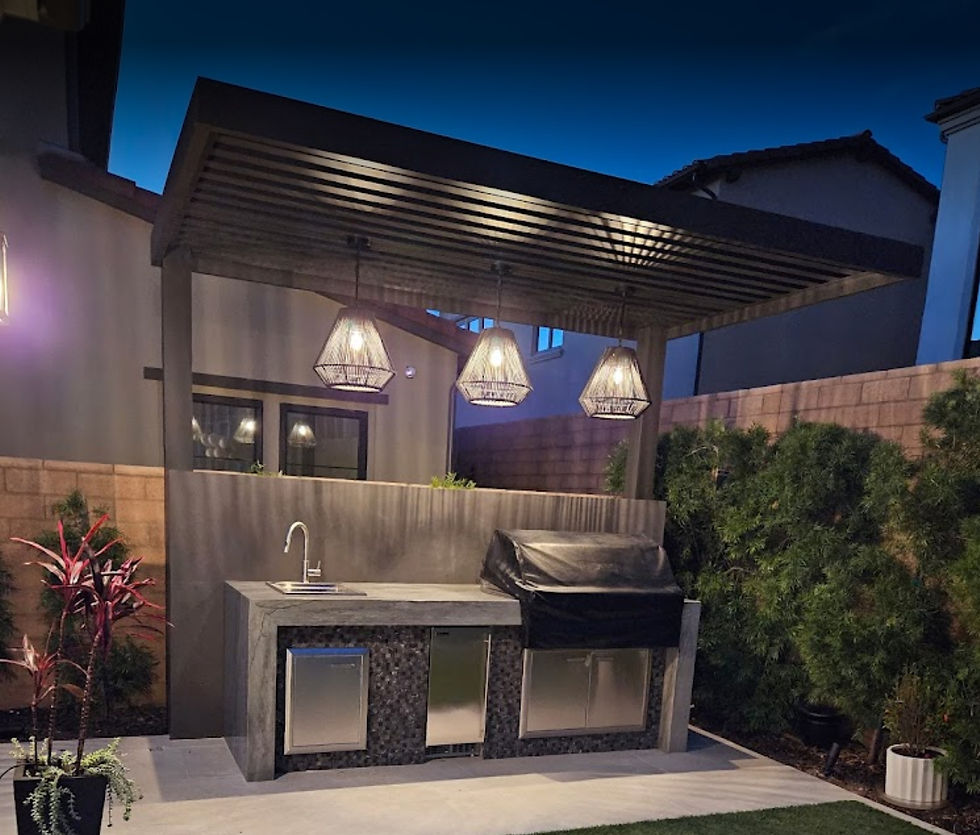
Extruded aluminum is widely regarded by structural engineers and high-end contractors as the gold standard for fire-resistant outdoor design. Unlike thin, stamped aluminum sheets, extruded aluminum is created by forcing raw metal through a shaped die under immense pressure, resulting in an incredibly thick, structurally independent profile.
Fire Safety Profile
Extruded aluminum is 100% non-combustible. It possesses a melting point of approximately 1,220°F (660°C). While an active wildfire can surpass these temperatures, an extruded aluminum patio cover will not catch fire, will not feed an advancing flame front, and will not generate the airborne embers that traditionally cause house-to-house ignition in suburban neighborhoods.
Performance in Southern California Climates
Beyond fire safety, Southern California properties must contend with seismic activity and extreme seasonal winds. Extruded aluminum offers a massive advantage here:
Wind Resistance: Heavy-duty extruded systems can be engineered to withstand wind loads exceeding 115 mph, making them highly resilient against Santa Ana wind gusts.
Corrosion Resistance: For coastal properties in areas like Huntington Beach, Newport Beach, or San Diego, extruded aluminum is naturally resistant to saltwater marine environments, meaning it won't rust or degrade over time.
The Honest Pros & Cons
Pros: Complete fire immunity; incredible structural span capabilities (fewer vertical posts blocking your view); sleek, modern architectural aesthetic; zero painting or sanding required over its lifespan.
Cons: High upfront material cost; limited color options compared to wood (you cannot simply repaint it on a whim); can feel hot to the touch when subjected to direct, midday desert heat.

2. Roll-Formed Aluminum (Alumawood, Elitewood, Duralum)
Roll-formed aluminum is the most popular patio cover material in Southern California. It is manufactured by taking coil aluminum and feeding it through a series of rollers that shape the metal into ultra-lightweight beams, rafters, and solid roof pans. To mimic the traditional look of a California home, manufacturers emboss a realistic cedar grain texture directly into the metal and seal it with high-performance paint coatings.
Fire Safety Profile
Like its extruded counterpart, roll-formed aluminum is classified as non-combustible. Because it contains zero organic wood fibers, it cannot ignite from windblown embers. It meets the strict requirements for California WUI zones and Zone Zero perimeters, providing a highly reliable shield directly against your home’s stucco or siding.
Performance in Southern California Climates
Roll-formed aluminum systems are exceptionally well-suited for the average suburban backyard:
Thermal Performance: Solid insulated panels (often containing a dense, flame-retardant foam core sandwiched between aluminum skins) provide exceptional thermal shade, blocking out the intense valleys heat of inland areas like Riverside or San Bernardino.
Low Maintenance: Unlike wood, it will never warp, split, crack, or suffer from termite damage—a massive issue across Southern California.
The Honest Pros & Cons
Pros: Highly cost-effective compared to extruded aluminum or steel; beautifully mimics the warm aesthetic of real wood lattice or solid patio designs; lightweight design allows for faster installation times.
Cons: Thinner profile means it is more susceptible to cosmetic denting if struck by heavy falling tree branches; cannot achieve the massive, wide spans of extruded aluminum without requiring extra supporting posts.

3. Light-Gauge Structural Steel Frameworks
For homeowners seeking maximum architectural strength alongside absolute fire protection, light-gauge structural steel framework is emerging as a powerful competitor. Often used as the hidden structural skeleton beneath architectural panels, steel offers unmatched durability.
Fire Safety Profile
Steel is completely non-combustible and has a significantly higher melting point than aluminum, retaining its structural integrity at temperatures up to 2,500°F (1,370°C). In a worst-case wildfire scenario where a canyon fire sweeps through a property, a steel framework stands the highest chance of remaining physically upright.
Performance in Southern California Climates
Steel is heavy, rigid, and unyielding:
Structural Integrity: It easily handles complex engineering challenges, such as steep hillside tie-ins, cantilevered decks, and massive spans that span an entire custom pool deck without a single middle post.
Seismic and Wind: Steel offers exceptional performance during earthquakes and high-wind events due to its rigid connection points and immense shear strength.
The Honest Pros & Cons
Pros: Maximum possible fire resistance and melting point; unmatched structural strength for large, expansive custom backyards.
Cons: Exceptionally heavy, requiring deep, costly concrete footings and specialized machinery to install; highly prone to rust and corrosion if the protective zinc or powder coating is scratched, making it high-maintenance in coastal zones.

4. Fire-Retardant Treated Wood (FRTW) – The Risky Alternative
Many homeowners are deeply attached to the rustic, architectural warmth of authentic timber. To accommodate this, the building industry offers Fire-Retardant Treated Wood (FRTW). This is real lumber that has been pressure-infused with fire-retardant chemicals during manufacturing.
Fire Safety Profile
FRTW typically achieves a Class A Flame Spread Index. This means that when exposed to fire, the chemicals within the wood react to surface heat by releasing non-combustible gases and water vapor, creating a protective char layer that slows down the burning process.
However, there is a critical legal catch: While FRTW is accepted by some local building departments for specific structural applications, many strict Southern California municipalities do not recognize it as a fully compliant non-combustible material for Zone Zero (the 0–5 foot perimeter).
Performance in Southern California Climates
Weathering Issues: The intense UV rays of the Southern California sun can cause the chemical treatments within FRTW to degrade over time. If the wood is exposed to winter rains, the fire-retardant chemicals can slowly leach out of the lumber, gradually reducing its fire rating year after year unless it is meticulously sealed and maintained.
The Honest Pros & Cons
Pros: Offers the authentic, uncompromised look, texture, and prestige of real organic wood; can be cut, shaped, and stained to fit any classic architectural style.
Cons: High risk of permit denial in strict high-fire zones; high long-term maintenance requirements; susceptible to chemical leaching, warping, and dry rot over time.

Material Type | Fire Rating | SoCal Weather Suitability | Maintenance Level | Relative Cost |
Final Verdict: Which Material is Right for Your Home?
Choosing the best fire-resistant patio cover material comes down to balancing your local zoning laws, your budget, and your home’s architectural design:
If you want worry-free local compliance, classic aesthetics, and the best balance of cost and performance, roll-formed aluminum options like Alumawood or Elitewood are the clear choice for the vast majority of homeowners.
If you are building an ultra-modern luxury home with sprawling expanses and want an outdoor structure that will last for generations without a single sign of wear, investing in extruded aluminum is worth every penny.
If you are firmly committed to the look of real timber, you must consult directly with your local building department regarding FRTW before purchasing materials, and be prepared for rigorous, ongoing annual maintenance to protect that fire rating.
At Everyday Patio, we believe in providing clear, transparent education so you can design a backyard that is beautiful, compliant, and—above all—safe.
Ready for an Online Quote or In-Person Design | Build Appointment?
Give us a call at 310-880-5525 or reach out to us directly via email at Team@everydaypatio.com.
We would be happy to help you create a space you will enjoy every day!


Comments